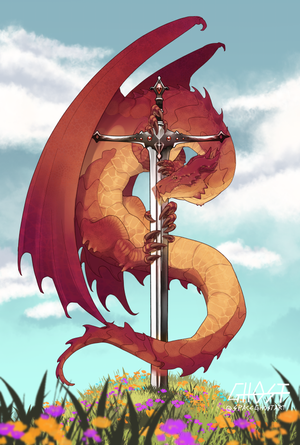
Broken Dreams and Mended Hope
For as long as Mari could remember, she was a dreamer. As a child she spoke about achieving all sorts of things, becoming a renowned doctor, saving all the animals in the world or having a castle filled with nothing but sweets. She dreamed that she'd find magic one day and learn how to fly wherever she'd like.
Adults smiled at her and told her she could be anything she wanted to be. That the world was hers to explore and the future full of possibilities. That hard work always paid off.
So she kept on dreaming, building castles out of mud and imagining herself dancing in gleaming halls as she propped up lopsided towers with sticks and decorated them with acorns. She drew everything she could the moment her hand managed to grab a pencil, and sang her little heart out often as possible, feeling happy and joyful.
She dreamed all throughout her childhood and even in her teenage years, when the world got a bit more difficult and her four older siblings grew ever more distant, she still dreamed. She kept drawing and painting and singing, for she loved it more than anything else.
Bad days could be made brighter and good days even better, if only she could grab a paint brush or dance through her room, singing made-up songs. She overcame getting her heart broken that way and grieved her beloved pet by painting a mural in her room.
She dreamed about painting the gleaming halls of the nobility so vividly the artworks looked alive and she dreamed about singing as good as the sirens in stories of old, drawing awe and admiration from all across the world.
She dreamed about joy and accomplishments, and a happy life. She was all too eager to encourage her friends at school, trying to fan the flames of their dreams brighter, to make them, too, believe that anything was possible.
She dreamed of a life where strife, and pain and difficulty, were only little stumbling stones here and there. She dreamed about overcoming obstacles heroically and, whenever she had a crush on someone, she dreamed about saving them or being saved. Of lovingly smiling at each other in a golden, gleaming sunset.
Most of all, she dreamed about filling her life with love. Love for art and the people she cared about. She hoped, with every fiber of her being, that those dreams would come true.
Her family and friends and neighbors were all for those dreams, right up until she graduated.
Once it became clear that she didn't wish to follow in the footsteps of her peers, that she wanted to dedicate herself to art and singing, the things she loved so much it made her soul glow, people started to hesitate.
It was jarring at first, but Mari thought, if she just worked hard enough and proved herself, they'd be happy for her. Her parents, at least, still believed in her, even if her older siblings said that they were letting her avoid life's lessons by supporting her dreams.
As if life had ever waited in teaching anyone anything. For all of Mari's joy, she had gotten her heart broken, had lost a beloved pet, had gotten hurt by others, and she wrangled with self-doubt often enough.
But, no matter how bad things might feel, she believed in the promise of a brighter morn. She believed in the stories she had heard growing up, in the stories she told herself, where hard work mattered and dreams came true.
She painted and sang, and while her friends and extended family did like what she was capable of, they didn't think she could make a living out of it. They were uninterested in buying from her, as were other people in their small town, who all disapproved of her choice in career.
They loved the arts, but only when it came from someone else. Someone famous and interesting, someone who carried all the allure and shine of being new, of being a stranger they could fantasize about. Someone who's flaws and faults they didn't know and therefore, who could be placed on a pedestal for admiring.
Her siblings especially grew ever more irritated with her and her parents, who kept encouraging her. One year turned into two and despite all of Mari's hard work, she barely sold anything and only a handful of people asked her to paint something for them.
The only people who bought from her were traveling traders who didn't know her and she performed with a group of bards for a week once, who had told her she was quite good and to keep doing what she was doing.
"One day you'll see we're right," one of her brothers, a talented woodworker, said to her with an unhappy frown. "You'll get an actual job and you'll regret the time you wasted when all the good jobs are unavailable to someone with no experience."
"How long do you intend to support her lunacy?" one of her sisters asked her parents, when she dropped off a beautiful iron gate she had made at her smithy, a gift so her parents could swap out the lopsided, wonky wooden one they had. "She's just a burden to you."
Mari worried that they were right, though her parents reassured her that wasn't the case. "We also paid for your siblings' dreams," they told her. "We got your brothers and sisters tools and paid for their apprenticeships and let them live with us until they saved up enough to buy their own places without having to take a loan from a bank."
The loan for a house would take years to pay off, especially when they wanted a few creature comforts added to the place.
The harsh words didn't stop, however, and when Mari pointed out to her siblings, in a small voice, that they had been given the same chance she was asking for now, they got angry with her.
They said it was different with them. They had learned a trade, after all. They had done something proper and good and normal with their lives.
"We at least have a real job," her other brother, a bookbinder who regularly supplied nobles and temples with his work, said sharply. "We all work hard."
She didn't dare point out that she was working hard as well, that she was doing everything she could, though... it wasn't working. Perhaps they were right, a part of her thought. Maybe she really was nothing but a burden.
But, Mari wanted to keep trying for a little longer. So she took all her savings, her art supplies, and left to go to the big city, her parents wishing her well and her siblings standing back with silent scepticism and disapproval.
They expected her to come crawling back soon, to prove them right.
The big city was incredibly exciting and rather intimidating all at once. Mari found an attic room to rent, above a seamstress's shop, and moved in swiftly. She went out the next day, eager and determined. It felt like all the possibilities in the world were at her very fingertips.
She managed to get hired as a bard at a local tavern, earning enough through tips and her hourly wage to pay for rent. She felt rather giddy, writing a happy letter to her parents to let them know that she was already finding her footing.
Only, this was as far as luck would carry her.
She sang every night at the tavern, learning how to read the clientele to figure out if they wanted happy or melancholic songs. She sat down with travelers and learned songs of their home, whenever someone was willing to teach her. She listened to their stories and found herself writing new songs of her own, her creativity downright spilling forth.
During the day, she painted and set up shop at a corner of the market square, hoping to find buyers or someone willing to commission her. That month, she just barely sold enough to pay for food and she told herself that it was normal. Many artists struggled, after all.
The months tumbled into each other and she just barely managed to make ends meet. She worked extra hours at the tavern two days a week, serving ale and food to the afternoon crowd. The pay wasn't good, but she was willing to ignore it, firmly believing that she'd soon be able to quit and live off of her art.
She was still optimistic and wrote home about the people who left her an extra tip for her performance and the elderly lady who had been very taken by one of her paintings, a red dragon soaring over a sunny landscape. She had bought it without haggling about the price and had left with a big smile, a memory that filled Mari with boundless joy even days later.
When rent got raised, however, the seamstress hitting on hard times, and the tavern told her they wouldn't pay her more for her work when she asked, she had to admit that neither singing nor selling paintings was going to cut it for much longer. She was already skipping meals as often as she dared, instead buying art supplies and if just one more expense came upon her, she was going to be in serious trouble.
That night she sat in front of the letter she wanted to pen and realized she couldn't afford the delivery fees. A part of her considered asking her parents for help, but she couldn't bring herself to. They had already done so much for her, after all.
As she stared at the nearly empty ink pot, she went through things in her mind and decided that she had to pick up an additional job for the moment. That her art had to wait.
It felt like failure. She couldn't help but remember all the things her siblings and neighbors had told her, about how she'd never make it. Her former friends had similarly been sarcastic and sharp about her choice in career and none of them had wished her well when she had left.
None of that changed the fact that she needed to find work.
She had avoided the artisan guild until now due to the steep fees they demanded for connecting artists and clients, but they also offered free board to those who did good work, a simple room, warm and dry.
The artisan guild, however, didn't want her when she dropped by and refused to look at the rolled up paintings she had brought along, saying that they only accepted people who had studied the arts at college. That they had a reputation to uphold.
Desperate to make ends meet, Mari started to look at other venues and she must've hit a streak of misfortune, for no one was looking to hire at the moment.
Right up until she walked past the delivery service and overheard the boss complaining loudly that she didn't have enough people who were willing to bring letters and parcels to more remote places.
Gathering her courage, Mari approached and smiled and lied her ass off. She had a little bit of experience with riding horses, thanks to a kind neighbor and his very patient draft horses, but she still made it sound like she was a pretty good rider and that, yes, she had traveled quite a bit before coming to the city.
She managed to sell her lies by regurgitating stories other travelers had told her of the places they had seen, and she put in all the performance skills she had learned as a singer.
With a hard look and a curt nod, she was hired. Part time, for now, the boss said, just to see if she was reliable, which worked just fine for Mari. She still wanted to keep singing in the evenings, after all. She hoped to get the lucky break she had been looking forward to soon.
She started right the next day and the horse was a patient, calm gelding who didn't get upset at her lackluster riding skills. Still, Mari felt rather accomplished when she managed to deliver the mail to the farms outside the city, though she barely made it back in time to rush into the tavern for her shift.
The tavern owner complained that she smelled like horse and sweat, but let her perform anyway. Exhausted, her legs, back and arms sore after a long day of riding, more so than she had expected, Mari collapsed into bed and promptly fell asleep.
Work at the delivery service was not easy, but slowly, as the weeks passed, her body got used to it, the saddle sores vanishing and she got better and better at riding as well, delivering mail faster and dropping off parcels without having to ask for the way a dozen of times.
She started to save up money, eagerly looking forward to the day she could quit and fully dedicate herself to art once more. She still set up shop at the market corner on the weekends and she felt a little spark of hope whenever a painting was bought. It was enough to at least cover the cost of continuing her art.
That was when her siblings wrote to her for the first time. Her parents' house had burnt down to the ground in a terrible thunderstorm, lightning striking a nearby tree and setting the dry summer brush alight.
Nothing was left and her parents had gotten rather sick when they had tried to save things from the fire. The cost for medicine and treatment was swiftly devouring what little savings they had left at the bank.
Her brother, sarcastically, asked if she could pay to get their parents back on their feet, since she surely was such a famous singer and painter now that she could easily afford it.
Mari barely had a couple of silver on her and she knew how much it cost to build a house – her siblings had certainly complained about prices often enough and that they had to save up a couple of years for it. For all that they had well paying jobs, even they wouldn't have the sort of money to just replace what their parents had lost.
Shame washed over her then, the feeling of being a failure returning tenfold. She hadn't achieved anything, had barely enough money left over at the end of the month to start saving up a little bit.
There was no way she'd tell her siblings the truth, not when she could imagine the way they'd smile, full of satisfaction and badly hidden schadenfreude. She couldn't bear proving them right and confirming all the mean things they had said.
Her parents, however, deserved all the aid she could give them, especially after all the support they had given her. Swallowing heavily, Mari blinked back tears as she looked at her little purse of three silvers and a handful of copper coins. It seemed her dream had to wait.
Packing the money up, she approached her boss at the delivery service the next day, asking to be hired full time. Her boss was quiet for a moment, then nodded, and Mari exhaled with relief.
With her boss hiring her full time, Mari went to the bank and took a loan, enough to ensure her parents could heal and rebuild their home. That they could rebuild their lives, while becoming as healthy and strong as possible again.
It would take her years to pay off that kind of debt, but considering the years of love and care her parents had poured into her, it was only fair to return that favor.
Since she and the other delivery riders had a secret system of delivering mail for each other free of charge, she handed the packaged money over to one of them, along with the address of one of her siblings, a note tucked into the parcel that said the money was for her parents.
The delivery service paid full time workers decently, though Mari soon found herself utterly exhausted after long days of riding and then spending long evenings at the tavern, singing for patrons.
When summer faded and the weather turned truly miserable, she ended up coming too late to her shift, since she couldn't ride her sweet little gelding as fast in the heavy rain without risking injury.
After the fourth time this happened, the tavern owner told her she was fired. That he didn't need someone unreliable and there was another bard anyway, who'd work for cheaper than she did. There were plenty of starving artists, after all, he had said with a snort.
That night, Mari couldn't help but shed a few tears, but even then she was too exhausted to cry much. As she curled up in bed, she tried not to feel like she had failed herself completely. It was just a set-back, she told herself. Once she had paid off the debt, she'd finally save up the money she needed to make her dreams come true. At least her parents would be taken care of.
As the seasons grew icy cold and then warm again, she named the gelding Gerard – her boss didn't name any of her horses, having mentioned once that it hurt too much when she had to sell them when they grew too old and slow for the job. Her boss couldn't keep them all, even though she wanted to.
Gerard was a true sweetheart, as reliable as the steady growth of trees and he seemed to enjoy her singing, too. He kept all her secrets and the one time she fell, he remained by her side, patiently waiting for her to get back in the saddle.
Her fellow deliverers never asked her why she was working here and she never asked them either. But they got along well enough to meet for dinner once a month and to help each other out when something happened.
When Gerard got sick, one of the deliverers knew how to help him get better. When another horse lost it's shoe, Mari took the extra mail and delivered it so the man could get his horse to the blacksmith and give it a day of rest.
She wrote home on occasion, telling her parents stories about the people she had met, which was easier than admitting that she had set her dream aside for the moment. It allowed her to skirt past the voices of doubt in her mind, the ones regurgitating what her siblings and neighbors had said.
Deep down she couldn't help but wonder if she hadn't been a delusional burden all this time after all. If she shouldn't have quit art altogether and far sooner.
She hadn't painted anything in months, too busy and too tired, though she still sang songs while riding Gerard, who always put one ear back to listen to her, so that was nice.
Sometimes, at night, curled up in bed and glancing at her dusty art station, she couldn't help the squeeze in her chest. Strangely enough, it felt like she was grieving.
She always scolded herself for it, reminding herself that it was just a temporary setback. That as soon as she had paid off her debt she could dedicate herself to her dream again.
More seasons tumbled past and she slowly chipped away at the debt. And yet, it felt like her dream grew further and further away from her as well, until it was buried beneath a layer of dust, like the gentle settling of earth on a grave.
In the meantime, Mari warded off requests from her family to visit her. Her siblings even asked to come around, to see the great house an artist like she must live in, and she found she didn't want to see any of them. She didn't want them to find out what had happened to her dream.
There was shame in her heart, and she couldn't help but feel like a failure whenever the nights grew too quiet. It haunted her, sometimes, when she thought about it too much. The dream that had grown quiet in her heart. A dream she had once shared so freely with those around her, bright-eyed and grinning and so eager to make it come true.
When she had been a girl who didn't yet know that sometimes... well, often, things didn't go her way.
It ached, her old dream, but she had gotten used to it. It had been three years now that she had abandoned her dream and from her estimate it would take another ten to pay off her debt in full.
Ten years felt like a very long time and even though she knew it would pass eventually, as the days crept by, so did the doubt seep in.
Not all artists made it, after all. She would hardly be unusual in that regard. And the more time passed, the more she started to believe it.
That was one of the hardest lessons life had ever taught her, she thought. That she wasn't anything special and that wanting something really hard and working really hard didn't mean she got her wish fulfilled.
Sometimes, it didn't amount to anything at all.
*.*.*
Mari was surprised when her boss approached her five years into her work with the woman. Delivery service was a not an easy job, but the boss paid fairly and on time and even chipped in for proper work clothes so they wouldn't get sick.
"I've been thinking about expanding my business," she said. "You're one of my most reliable deliverers and you've helped out with administration a couple of times. You have a good head on your shoulders and you've been one of my best these past couple of years. What do you say, would you like a promotion?"
"To what?" Mari asked, Gerard snuffling at her arm and she gently pet the horse's nose.
"Managing the new stable," her boss said and then shrugged. "I can always ask Bertrand if you don't want to. He'd be my second choice."
"I want to," Mari said right away, only to pause and squint. "Does that include a raise?"
Her boss smiled and waved her in to discuss the details. It involved a lot of haggling, but by the end, Mari was the owner of Gerard for good and she got a nice raise. She also had to pack up and head to the new city by the end of the month.
Her boss had already picked out the new place and had horses waiting to be sent, trained by her, so Mari knew the animals would be well behaved and smart. Once Mari received the horses, it was up to her to ensure the additional delivery house was a success.
"If you're responsible for its failure, you're fired," her boss said at last and Mari nodded, swallowing down her nerves. She hadn't managed to sell her art much, but she really wanted the raise and she had Gerard now and she... she wanted to do this.
She wanted to succeed at something in life.
So Mari packed up her bags and left the room behind she had lived in all this time, unwilling to get an apartment, because deep down, she had always wanted to quit working for the delivery and start doing art again.
Also, apartments were expensive and with the debt to pay off, she had little money left at the end of each month as it was. Which was another reason why she had wanted to accept her boss's offer, for the stable came with a small apartment above. It would always smell like horse and hay, but the rent her boss had offered her was dirt cheap. It was barely more than she currently paid for her attic room.
The new city, when she arrived, was lovely and somehow seemed a lot brighter and more colorful. A city of the arts, she realized, as she got unpacked and Gerard settled before the other horses arrived.
It made a part of her pang and ache, but she breathed through it and focused on her work, only to realize that, well, someone had to design flyers and that someone was her. Her boss had told her to take care of the new stable and post office, after all.
It felt strange to come up with designs again after so long and Mari waffled back and forth on them, terrified that her flyers would be the reason her boss's business failed.
In the end, she made a couple of different flyers. On one there were running horses that held letters in their mouths, in the next gallant knights delivered parcels and another again had a deliverer waving his hat and smiling brightly, while birds flitted around him.
The text was the same on every flyer and she painted until late at night for nearly a week, rising early the next day to spread them around town, before she returned to take care of the horses.
By the end of that day, there was already a small group of people, looking curious and eager, clutching letters and little parcels in their hands. The prices were fair and they paid them without hassle, taking curious peeks past the stable, where the horses were out on the pasture.
Mari was about to set out on her own to get everything delivered as quickly as possible, when two siblings approached her, tall and lanky. They asked for work with the sort of desperate hopefulness that Mari felt in the marrow of her bones. She wondered if she had looked like that to her boss years ago.
She watched them with the horses when she asked them for a demonstration, their hands gentle and their voices soft and they handled the letters with care, which made her hire them.
They set out together, splitting apart at the gate to deliver everything.
It was a successful first day, but Mari was wary and unwilling to get her hopes up. She knew how swiftly luck dwindled away and how sometimes, some things just were not meant to be.
But a successful first day turned into a successful week and then a successful month. Before she knew it, she had hired enough deliverers to take care of the mail and they were so busy, she ended up staying at the stable most days to receive the letters and parcels that were brought in at all times of the day, taking care of the paperwork and ensuring the deliveries were running smoothly.
Most clients, when she asked, told her they had come here after seeing the flyers and liking them quite a bit. It made her feel flush with a quiet sort of pride, though she also knew the reason they kept coming back was because they knew she offered a reliable, fair-priced service. Nothing got stolen and when the weather was bad, the mail was carefully wrapped in wool and kept in leather bags, keeping everything safe and dry.
Mari sent a first report to her boss, who wrote a short letter back, full of gruff praise and told her to keep going.
Mari found herself with free evenings at her hands now that the post office was running smoothly and she wasn't running deliveries until late at night aside from two days a week, to ensure she was familiar with the routes and to get Gerard out and on the road. He rather enjoyed it, always neighing when he spotted her entering the stable or trotting towards her with a welcoming rumble when she fetched him from the pasture.
As she stared at the paint she had unpacked for the flyers, she decided to paint the stable as well. It would use up her leftover paints so they wouldn't dry out and it would brighten up the place.
If her boss visited at one point and hated it, Mari could always remove it again.
The horses were good company, chewing on their dinner as they watched her. Mari started with Gerard's stall, who was always so sweet and carried her anywhere she wanted to go at a swift, unafraid pace.
She painted him on the door of his stall, along with his name and she surrounded him with a summer landscape, red apples at his hooves and a calm attentiveness to his posture that reflected who he was.
She did that for all the horses over the next nights and she was secretly, quietly, pleased when the deliverers told her it looked amazing, their faces brightening. They also came to her with name ideas for the other horses and she found herself laughing and telling them to name the horses they were riding.
Soon the last stall door was painted and she turned to the outside of the post office, painting flowering vines along the corners, the blooming buds turning to fairies that had little delivery bags slung around their shoulders as they soared towards the roof.
Before she knew it, she was buying new paint to keep going, adding a lazy dragon to the top of the arched window of the post office, one golden eye open to watch what was going on, while rearing unicorns framed the large stable gate.
It felt good to do something creative without pressure and Mari felt herself glow when people complimented her work, though her smile got a bit of a stiff look whenever they asked her if she was an artist.
"Not anymore," she told them, swallowing down the shame that still came with such an admission, the quiet but never-fading ache of a dream she had given up. "It just didn't work out."
"What a shame," they'd tell her and she wondered if they would have bought her paintings if she had offered them. Probably not, people often said nice things about art, but the moment they had to pay for it, they often started to backtrack or complain about the price.
She kept wondering about it and ultimately, she tentatively set up a few paintings in a corner of the post office. If people bought them, great, if not, well, that was hardly anything new.
One or two paintings got picked up over the next two weeks, but it wasn't until a lord breezed into the post office one rainy day, demanding the swiftest delivery for a truly important letter, that Mari's fortune changed.
She charged him the appropriate amount for the rushed delivery and then he stopped in his tracks, staring at one of the paintings she was proudest of. A knight was battling a hydra on a rearing, white horse, her face full of determined courage.
It was a painting that represented overcoming adversity, battling something far larger than the viewer and giving them the impression that the knight would win. That anything was possible with bravery and a stalwart heart.
"How much?" the lord demanded. "My sister will love it."
She stated her usual price and his brows rose in pleased surprise, before he offered a curt nod, paid and waited until she had wrapped it in a bit of leftover wool-cloth, before he ducked back out into the rain.
Mari delivered his letter personally and Gerard was more than happy to be out on the road for the rest of the day, for the journey was long. They came back in the early morning hours, both of them exhausted and Mari yawned through the rest of her work day, nearly falling asleep a few times.
She had put the lord out of her mind until a lady appeared, introducing herself as his wife, and asking about her art. Mari felt a bit baffled and flattered, though she didn't dare to hope for much as she gestured at the paintings stacked off to the side.
The lady took her time looking through them, humming to herself and at last she gasped and picked out a colorful piece, of a dancer dressed in flowing silks and surrounded by peacocks and glowing lanterns. The lady paid and left and Mari tucked the money away, wondering if she, perhaps, should buy canvases again.
Well, she was done painting both the stable and the post house, so why not. For the first time in months, she sang later that evening, as she set up a new canvas and ideas sprang forth.
In her heart, beneath dust and resignation and love for her parents, her dream stirred.
*.*.*
Mari expected the interest of the nobility to wane, but she was surprised to soon have the steward of the lord's castle appear, all self-important and dignified, yet he looked at her art like it was something deserving of his time and consideration.
He picked one of her piece, of a beautiful lake where lovers shared a picnic, all sweet looking and lovely. It was, supposedly, going to be part of the dining room. Mari had even dared to raise the prices a little bit and he hadn't even hesitated, paying without complaint.
Surely, that was it though. The attention of the nobility was fleeting, after all, and there were plenty of equally good artists who'd hold their attention soon.
Then the lord came back again, looking through her leftover art and, unsatisfied with what he saw, commissioning her for a specific piece. He demanded a private conversation and swore her to secrecy, before describing what he envisioned.
He wanted himself as a pirate lord and his wife as a powerful, dangerous siren who had him in her clutches. For all that he kept his decorum during the discussion of how he wanted it to look, the composition and colors, the facial expressions and overall air of the painting, there was a light in his eyes and she swore he was fighting back the urge to smile multiple times.
So Mari got to painting and soon presented him with the finished work. He nodded, a hidden smile curling in the corners of his mouth. He paid her and left with swift steps.
After that, bit by bit, more people appeared, not to hand over letters and parcels – or, not just that – but also to buy art from her. The lord's friends, wealthy merchants, the mayor and a couple others, who had heard about the lord's fancy of her paintings and now wanted some of their own.
If they couldn't find something that struck their fancy in her displayed art, they commissioned her. It got to the point where even regular folk heard of her and dropped by to get something for their homes.
Before she knew it, she had a wait list because she couldn't accept more commissions and she stared at it, utterly baffled, her heart aching as hope bloomed. She didn't know why, but she was crying, feeling both overwhelmed with joyful gratitude and like this couldn't be true.
It was too much luck. Surely it wouldn't last. Her luck had never lasted before, after all.
Thankfully, Gerard didn't mind her ranting or her tears and took the apple she offered him very gently, crunching it with calm satisfaction as he watched her leave in a huff, rushing up to her little apartment to get started.
When Mari met with her delivery friends, she found herself talking about that unexpected strike of luck, where previously she had kept her broken dream and ruined hope to herself. Talking about it had hurt too much and had filled her mouth with the taste of shame and failure.
But now, everything spilled forth. She couldn't believe it. Didn't dare believe it, not when all the time she had spent working hard for her dream had been fruitless. Not when there was still shame in her heart over her failure.
But her friends were excited, they clapped her on the shoulder and cheered her on and demanded to see her art. They left the tavern and ended up in her small apartment, the space now cramped but the mood great, and her friends insisted on buying pieces for themselves.
They utterly refused a friendship price and then everyone got drunk and she ended up sleeping in a big pile with them on the hearth.
When she woke, hope had wriggled it's first bud out of the dust covering her dreams and she couldn't keep it from blooming.
And yet, as much as a part of her was starting to feel bright and flush with hope, the rest of her grimly feared the pain when it all broke apart again, turning to ash between her fingers.
*.*.*
Her boss visited and took one look at the painted stable and post office, before she rounded at Mari. "You did that?" she asked and when Mari nodded, standing tall and heart warded against rejection, her boss grinned. "Get a replacement for a month and do the same for the other stable."
The breath rushed out of her and she must have looked surprised, for her boss clapped her on the shoulder. "You do good work. Come on, show me the inside."
A week later, Mari found herself returning to her old place of work and she spent the entire month painting both the inside and the outside and her boss even bought one of her artworks to display in the post office.
They went out to eat along with all the other deliverers and it was a big, loud group that filled two big tables of the nearby tavern, mood jovial and even Mari found herself laughing freely, chest full of joy.
She had no idea if her recent successes made the others more open, but soon people revealed their own dreams, things they had set aside when fate or luck or just life itself had demanded something else from them.
One man had given up poetry in favor of earning money to feed the twins his wife had unexpectedly birthed. Another deliverer had gotten betrayed by a business partner, all the money stolen and they hadn't found the strength to try again, even though they had been saving up all this time.
One of her friends told her about taking care of a sick sibling and giving up dancing as a career because of it.
Even the boss admitted that she hadn't wanted to found a mail delivery service, she had wanted to become a knight and, when she wasn't chosen, someone who trained a knight's horse. But none of the knights had wanted her horses back then, saying she was too green and inexperienced to train them properly.
"I war nearly out of money and desperate," the boss admitted. "I had horses to feed and no funds, so." She gestured. "A delivery service was what I came up with."
There were more tales like that and Mari realized their gathered group was made of broken dreams and hardy people, who still managed to find joy and softness in their hearts, despite the wounds of giving up what made them happiest in favor of the love they held for others.
Who maybe, deep down, still dreamed.
*.*.*
"How much have you earned with your art?" one of her friends asked after dropping by after work. It had happened more frequently, ever since that long night at the tavern. Whenever someone passed through the city she worked in, they spent the night at her place.
Sometimes they watched her paint, sometimes they sang with her as they cooked together and sometimes they ate with her and fell asleep immediately, worn out from the long road.
Mari paused. She hadn't checked, usually she dropped the coin she earned in a box beneath her dining table and whenever she needed new paint or another canvas, she grabbed something from it. If she ran out, she ran out, she reasoned.
She also hadn't kept track to avoid getting her hopes up unnecessarily. She still had a debt to pay off, after all, most of her salary going towards that and she hadn't wanted to think about her dream when she'd be stuck in debt for years more.
At her friend's urging she got the box and grunted in surprise at the weight. Setting it down on the table, her friend leaned in as she opened it. Her friend whistled and helped her stack the coin. Next to no copper, but a lot of silver.
Mari stared at the neat stacks they made, counting how much gold she could exchange the silver for. Then she stared a little longer, before she sat down heavily, pressing a hand over her mouth as tears suddenly filled her eyes and spilled over.
"Shit, what's wrong?" her friend asked and then she was sobbing and laughing all at once.
"It's enough," she choked out. "I can pay back the debt."
Her friend was hooting and hollering the next moment, throwing their arms around her and swaying her back and forth as she laughed and cried.
Her friend made her gather everything and they headed for the bank right away, managing to get an appointment before the building close down for the night.
An hour later, Mari stepped out on the street, free of debt for the first time in years.
"Come on, we gotta celebrate," her friend said, grabbing her hand and towing her along, a bright grin on their face. "Man, I'm so happy for you!"
They threw a little party, just the two of them, and Mari was so happy she still burst into tears from time to time. It was done. She was free.
In her heart, hope bloomed and grew, crawling all across her lungs and weaving around her ribs, spilling color into her bloodstream and making her feel like she could properly breathe for the first time in forever.
Hope was such a glorious thing and with it came her dream, crawling and limping, but it refused to go back into the dark. To lie down and be covered in dust and pretend to be dead again.
Mari hugged her friend and breathed in the feeling of hope and rejuvenation and not even the grim realist in her could dampen and dim this moment.
So, for the first time in far too long, she dared to truly hope. She hoped that, this time, luck wouldn't run out.
And it didn't. Her art kept being bought to the point where an art gallery approached her about an exhibition and she had to swallow down tears as she agreed. She invited all her friends and her boss and they showed up in their finest clothes, shoes shined and polished.
"So," her boss asked when Mari took a break from making her rounds, all her displayed art sold and her wait list longer than before. "Will you move on to greener pastures now?"
Mari hesitated. A part of her jumped at the chance to do exactly as she had wanted years ago, but... but she loved these people and she loved the horses and she wanted to stay. She didn't want to lose this.
"No," she decided and bumped elbows with her boss. "Can't get rid of me that easily."
"Good," her boss said. "Because there is enough income that I'm going to open a third stable and I need someone to paint it and make flyers."
Mari smiled and then glanced at her boss. "Why not get someone to take over administration so you can focus on training more horses instead?"
Her boss was silent, staring into the distance and while she never answered, when she left later that night, there was a gleam in her eyes. A dream waking up after pretending to be dead.
"Why not do the same?" her boss asked her as they walked down night-dark streets together, lanterns illuminating the space with flickering flames. "Get someone to do the paperwork. You'd have to pay them fairly from your salary, of course, but you'd still be there and you'd have more time for your art."
Mari hadn't even considered it. If she could hand some of her tasks and chores to someone else, she could still ensure that the post office ran well, that standards were upheld, horses treated well and deliveries running smoothly, while having more time to paint.
She no longer had a debt to pay and she could live comfortably off of what she made as an artist. It wouldn't hurt her to loose a chunk of her salary if it freed up more of her time.
They walked on in companionable silence and the next day, Mari found herself flagging down one of the deliverers she had picked personally. A young lass full of drive and passion and a smart head on her shoulders. The girl had helped her out a couple of times in the past and it would be an easy thing to train her to take care of the administrative tasks.
A couple of months later, after Mari had painted another stable and post office and had made new flyers for all three stables, the boss sent her a letter. A letter that said, this time, the knights did want her horses, after having heard what reliably and swift and well-behaved, well-trained steeds her delivery horses were.
More than that, there were a number of other people who wanted her animals as well.
Now, whenever a horse wasn't as fast anymore to take care of deliveries in time, though still plenty healthy, she could sell it into good hands and make good money at the same time. Her boss had even been asked by the local lady to train the pony her daughter was going to ride once she was old enough.
Mari laughed, glad for so much good fortune and told her boss how happy she was and to do it all. To grab every opportunity by the throat, if she wanted to. It wasn't like her boss had anything to lose, after all, not when she had already given up on her dream.
Another couple of months later, just after winter had released its grip and the warmth of spring caused the insects to buzz and the birds to sing, a letter was sent to all the stables.
There was to be a raise for all the deliverers and everyone grinned wide and happy. Mari received an additional letter, the boss revealing that the horse training business combined with the delivery business was going so well, she hadn't even known what to do when she looked at the numbers and the money she was making.
Mari understood her only too well, her own saving's box kept filling up again, though she also hoarded it carefully. If her luck ran out again, she wanted to be prepared.
And bit by bit, with the raise they all got, she saw her friends pick up their dreams again. She got them into contact with other influential people who came by to get art from her and talked with them about their fears and worries, which she understood all too well.
Soon, the poet was writing poems again, the dancer was performing once more and her business oriented friend dared another try. They still worked as deliverers two days a week, but they had significantly cut down on the time they spent on the road.
Of course, life wasn't made to be smooth-running all the time. There were times when Mari sold little art, until customers appeared again, but this time, that was alright.
She wasn't worried, not when she had enough financial padding to be fine in those times. And not when she had found, had build, a community of people who were willing to support each other and cheer each other on.
Not when, whenever someone's luck ran out, others jumped in until it flowed once more. For as Mari supported her friends and boss, they supported her right in turn.
She hadn't realized just how happy she had grown to be, until a letter from her parents arrived, begging her to let them visit.
There was no shame, no failure in her heart this time, only a wealth of love. She lowered the letter and glanced into the stable, her friend who had delivered said letter untacking his horse with gentle hands, the horse leaning into his broad hands trustingly, sighing as it got its neck massaged.
She glanced at Gerard, who was one of the older horses, but still strong and spry and she smiled a little wider.
Later, with her friend snoring peacefully, both their bellies full with good food, Mari penned an answer. She told her parents that they could visit any time they liked and that she looked forward to seeing them again.
She didn't say anything about her siblings and found that she didn't care, either. It didn't matter if they came or not, if they said anything or not. Not anymore.
There was nothing for her to hide, nothing for her to be ashamed about. She had made it through hard and dark times and she was genuinely, truly happy now.
As she listened to her friend's snores, she grinned to herself. Dark times might come again, but this time, she wasn't alone and her dream had grown stronger in her heart, having put down roots like weeds that came back year after year, no matter how someone tried to rip them out.
She had accomplished much more than she ever thought she would when she had given up on her dreams and something told her, a little gut feeling – or perhaps the dreamer in her – that she was only getting started.
She looked forward to what tomorrow brought, secure in the knowledge that she'd weather fierce storms and dance in the mud afterwards.